
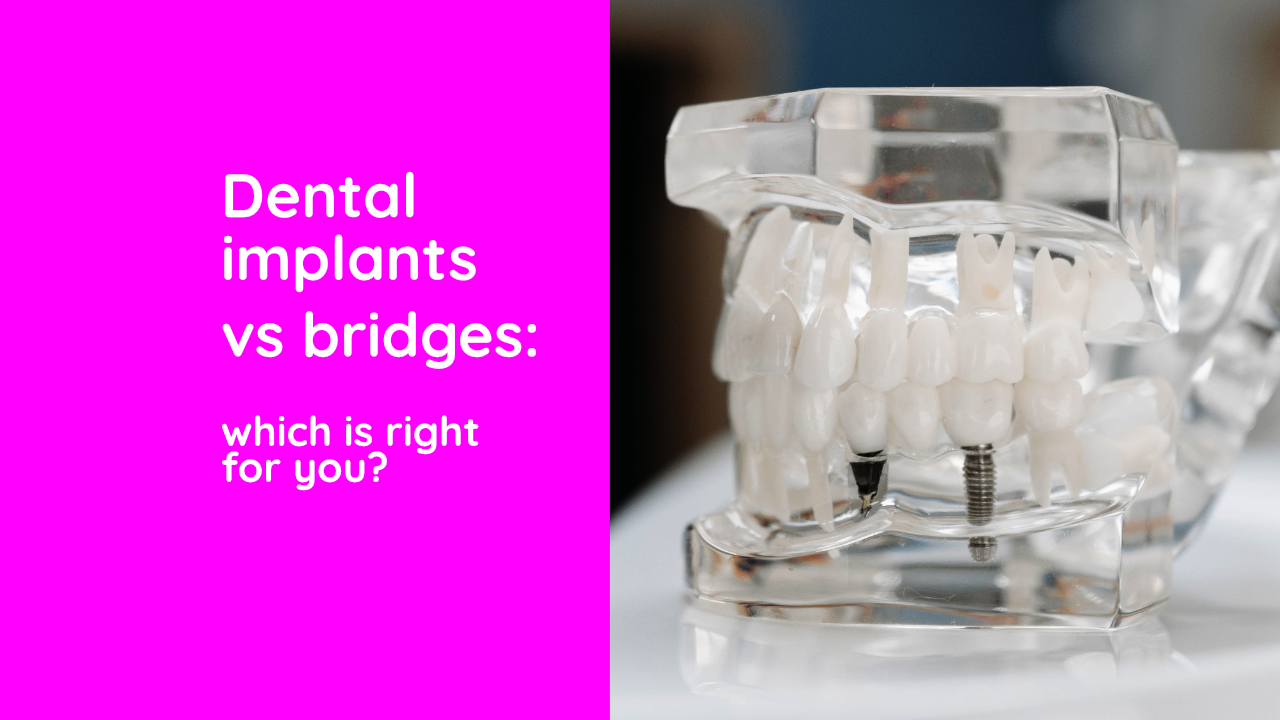
For a single missing tooth, a dental implant is usually the better long-term choice, because it replaces the tooth without touching the healthy teeth on either side. But a bridge can be the right answer in specific situations, particularly for one narrow gap at the front of the lower jaw. Dr Andrew Fennell at Love Implants in Colchester explains the real differences, including the ones patients are rarely told about.
When an adhesive bridge is the right choice
An adhesive bridge is a false tooth with a small wing that bonds onto the tooth next to the gap. For a single narrow missing tooth, such as a lower front tooth, it’s an excellent option: very successful, reliable long term, and lower cost than an implant.
For a lower incisor, Andrew would choose an adhesive bridge every time. It also works well for some small upper teeth, where there often isn’t much room to place an implant anyway.
Its limits matter, though. An adhesive bridge isn’t strong enough beyond a single small tooth. Use one to replace two teeth, a large front tooth, or a back tooth, and it will likely come off within six months.
Why conventional bridges can damage healthy teeth
A conventional bridge is what was done routinely before implants were widely available. The teeth on either side of the gap are ground down as if they were being crowned, then three connected teeth are cemented into place, with the middle one a false tooth suspended over the gap.
The problem is what it does to the healthy teeth. Grinding down a perfectly good tooth risks nerve damage that can lead to root canal treatment, weakens the tooth, and can cause long-term sensitivity. And you do that to two teeth in order to replace one. It’s a destructive treatment when the alternative leaves those teeth untouched.
How implants and bridges load your teeth differently
This is the difference patients are least often told about, and it’s an important one.
An implant carries its own load. It’s anchored in the bone, so it actually reduces the strain on the neighbouring teeth. A conventional three-tooth bridge does the opposite: it increases the load on each supporting tooth by around 50%. If either support tooth has any weakness, it will eventually fail, and then you’re left with two teeth missing instead of one.
Which is right depends on how many teeth you’re missing
For a single missing tooth, an implant is by far the gold standard. It replaces the tooth, protects the teeth around it, and is built to last.
For two or three missing teeth, a bridge is only ever a short-term treatment. You’re putting the load of four or five teeth onto two, and it will fail. To replace several teeth in a way that’s fixed, permanent and long-lasting, implants are what’s required.
The exception is that single narrow front-tooth gap, where an adhesive bridge remains a genuinely good, lower-cost choice.
Common questions about implants and bridges
Is an implant always better than a bridge?
No. For a single narrow gap, especially a lower front tooth, an adhesive bridge is an excellent and more affordable option. For most other single-tooth cases, and for replacing several teeth permanently, an implant is the better long-term choice.
Why is grinding down teeth for a bridge a problem?
It risks nerve damage that can lead to root canal treatment, weakens the tooth and can cause lasting sensitivity. And it’s done to two healthy teeth to replace one. An implant doesn’t touch the neighbouring teeth at all.
Can I have a bridge for several missing teeth?
You can, but it’s short-term. A bridge spanning several teeth loads the supporting teeth far beyond what they’re designed to carry, and it will eventually fail. Implants are the permanent solution for multiple missing teeth.
Is a bridge cheaper than an implant?
Often, yes, up front, particularly an adhesive bridge. But a conventional bridge can cost you more over time if it damages the supporting teeth, and a bridge across several teeth will need replacing when it fails.